Hey, all! I'm in seminary now!
So, this entire year has been rather eventful: from my brother and his family becoming Roman Catholic (former Baptists), to me starting a relationship with a girl (some girl...likes me? I know; I'm amazed, too!), to starting a new podcast, to a car crash, to lots of traveling, and finally, to applying and now attending a seminary, I've been through quite a bit!
What seminary am I at? Well, Trinity School for Ministry, of course! It's an Anglican seminary, with a strong Evangelical bent to it. You might think that a cranky Anglo-Catholic like myself would want to stay away from an institution with such a push...and you'd be right, probably. While I'm Anglo-Catholic, I'm not (always) cranky.
But sincerely, I don't want to be unbalanced. There is this understanding of Anglicanism where we are "three streams" of Christianity: Liturgical, Evangelical, and Charismatic. I don't want to segment myself into simply one of those streams; I want to embrace the fullness of the Faith. Catholicism, properly understood, embraces the fullness of the Faith, and I want to do likewise.
Trinity is an amazing seminary, with excellent professors and a welcoming, loving spirit. The education has, so far, been top-notch. As well, there is a Lutheran track for my Lutheran friends! What I love best is how the seminary is equipping us for ministry, rather than simply filling empty heads with knowledge (mine's more emptier-er than others).
Please keep me in prayer, as finances are tough during this time.
That's where you guys come in.
I've set up a Patreon page in order to help with the finances for my time in seminary. I'm going for an M.Div, so that means I'll be here for three years. As of now, I'm doing full time work and full time school; while I am so far managing that balance as much as I can, it is incredibly stressful and does not allow me to fully immerse myself in my studies. Donating to my Patreon will help me, immensely, in being able to devote my time to my academic studies.
Thanks for sticking with me while I continue this crazy ride through life, continuing to follow my Lord and Savior, Jesus Christ, however imperfectly that is done. :)
Thursday, October 5, 2017

Thursday, January 12, 2017
For the Wages of Sin is Death, Not Torture: Why I Hold to Annihilationism (Part 2: Scripture)
Sorry; this was finished much later than I was hoping. I partly forgot to finish it and partly was busy with school and the Christmas Season.
In the last article on this subject, we talked about the reasons, nature, and goals for punishment. I want to, in this article, look at specific passages talking about the nature and goals of punishment. This is Part 2 in my explanation and defense of Annihilationism (Part 1 can be found here).
Before we start, I want you to do something for me. I want you to challenge yourself on a few presuppositions:
Find me a verse stating that souls are inherently immortal.
We come to Scripture, many of us, with the Platonic error of assuming that souls are inherently immortal, and therefore either can't die or by default will never die, wicked or righteous. What verses claim that?
Find me a verse stating that the punishment for sin is eternal conscious torment.
Aha! You might say. You probably came up with Revelation 20:10 or Matthew 25:46. Eh...just hold on to those verses; they'll be dealt with soon enough.
Also, I want to assure you that Annihilationism is NOT the following:
It is NOT the claim that there is no punishment for sins.
It is NOT the claim that the punishment for sins is temporary.
It is NOT the claim that there is no hell.
There; are we good? Okay, now, onward!
The Nature of the Punishment: Death, not Torture
Romans 6:23
"For the wages of sin is death, but the gift of God is eternal life, through Jesus Christ our Lord."
The wages of sin is...death? Not torment? But can't death simply mean "separation from God" or something?
I mean, it can and, I would argue, does have that definition. The problem is that that definition would still point to annihilation. If God is the Source of life, and you are separated from God...you are separated from the Source of life. No one is truly and fully separated from the Source of life until the Judgment. Even the reprobate today receive the grace of God: "The rain falls on the just and the unjust."
Matthew 10:28
"And do not fear those who kill the body but cannot kill the soul; rather fear him who can destroy both soul and body in hell."
This passage speaks so clearly to what death is in the context of its relationship to hell. Here, what Jesus says is that what happens to the body at death by the hand of man (destruction, cessation of life in the body, but not cessation of life in the soul), happens to both soul and body in hell (destruction, cessation of life in both body and soul).
2 Thessalonians 1:9
"They shall suffer the punishment of eternal destruction and exclusion from the presence of the Lord and from the glory of his might."
The wicked suffer the punishment of "eternal destruction", and they will no longer be in the presence of the Lord or the glory of his might. The destruction lasts forever, unlike the 1st death. This is compounded by the fact that they will no longer be in the presence of the Lord. The Lord, Who is, of course, omni-present.
Matthew 25:46
"And they will go away into eternal punishment, but the righteous into eternal life."
After spending quite a few verses detailing how the righteous and wicked will be judged, Jesus states that the wicked will receive eternal punishment, but (and the word "but" is essential, here!) the righteous will receive eternal life."
"But Barely Protestant! Jesus just stated that the wicked will receive 'eternal punishment', right? Surely, that means that the wicked are tormented for all eternity!"
Nope. At least, not necessarily. And when you define the punishment for sins as Scripture does, it really doesn't make sense to claim that the punishment is eternal torment.
A man who is sentenced to be killed for his crimes, what is his punishment? Death. Death is his punishment.
"But Barely Protestant! It says 'eternal punishment'! Death isn't eternal! It's, well, momentary, and...well, okay, it actually is eternal, I guess, but, well, it doesn't hurt eternally! So there!"
The first death isn't eternal, sure. After all, we all get Resurrected. However, the righteous and wicked are Resurrected to be judged, and the punishment of the wicked is known as "the second death". In addition to this, the Scriptures repeatedly state (as has already been seen) that the punishment is death. If the first death is not eternal, and the punishment is known as "the second death", then it makes sense that Scripture would call this "eternal punishment": the punishment (death!) is eternal! This isn't contrived, but a consistent reading of what Scripture repeatedly says about the punishment for sin.
I could go on and on with these passages, but I want to finish this article up some time this century, so I will instead give references to a few more along these lines:
(This list is taken from Preston Sprinkle's article on the subject. Preston Sprinkle co-wrote with Francis Chan Erasing Hell, a book responding in part to Rob Bell's Love Wins; after co-writing that book, Preston Sprinkle now leans heavily towards the concept of annhilationism, though he is not yet thoroughly convinced. As well, I and many annihilationists would differ from him on certain claims, even in the above-mentioned article. Here is the first part of a two-part interview Preston Sprinkle did with Rethinking Hell on the subject; it's a very good listen!)
Verses talking about the punishment being "destruction" or "perishing":
Matthew 7:13, John 3:16, John 17:12, Acts 8:20, Romans 9:22-23 (hey, Calvinists! it's in your favorite chapter!), Philippians 1:28, Philippians 3:19, 2 Thessalonians 2:3, 1 Timothy 6:9, Hebrews 10:39, 2 Peter 2:1, 1 Thessalonians 5:3.
Verses talking about the punishment being "death":
Romans 1:32, Romans 6:21, Romans 7:5, Romans 8:6, 1 Corinthians 15:21-22 and 56, 2 Corinthians 2:16, 2 Corinthians 7:10, James 1:15, James 5:20, 1 John 5:16, Revelation 2:11, Revelation 20:6 and 14, Revelation 21:8.
Verses talking about the punishment being the "end":
Romans 6:21-22, 2 Corinthians 11:15, Philippians 3:19, 1 Peter 4:1.
Verses talking about the punishment being "disintegration/corruption":
Galatians 6:8, 2 Peter 1:4, 2 Peter 2:12.
This barely scratches the surface; for instance, we've not even hit on the Old Testament passages! But I hope these are enough to at least help you rethink your understanding of what Scripture says about the nature of final punishment.
The Goals of God's Judgment
The way Scripture talks about creation after the Judgment leaves me with only two options: Annihilationism or Universalism. Why? Well, let's look at what Scripture says:
1 Corinthians 15:24-28
Here, we see a future in which all of creation is under the rule of Christ, Who gives His Kingdom to the Father. It explicitly states that "the last enemy to be destroyed is death". Even death itself will be no more, after all of the wicked are destroyed.
Colossians 1:19-20
We see God reconciling ALL things to Himself through Christ. This paints a picture, along with 1 Corinthians 15, of there being a time where there is no more death or rebellion against God. Now, in the traditional understanding, is there still rebellion? Of course there is. Those in hell would be still rebelling against God, would they not?
Isaiah 66:22-24
Here, we see a depiction of the result of the final judgment, after a poetic passage proclaiming that "From new moon to new moon, and from Sabbath to Sabbath, all flesh shall come to worship before Me, says the LORD." All flesh shall worship the Lord, and the dead bodies of the wicked will be eaten by worms and burned in unquenchable fire. Notice that the people, the wicked, are dead. This isn't talking about torment, but rather their dead bodies; their carcasses. The worm "dies not" until it has completely eaten the flesh, and the fire is "unquenched", meaning it will utterly destroy what remains, without interruption.
Objections:
"But," some of you might say, "what about the Rich Man and Lazarus? What about Revelation 20:10?"
The parable (or true account, if you wish: it doesn't change this question either way) of the Rich Man and Lazarus (Luke 12:19-31) is not about hell. Specifically, it's about the intermediate state, known as hades. Whether this depiction is to be taken as a factual account or a metaphor, the point is that this is depicting what happens before the Judgment. This is evidenced by the fact that the Rich Man asks Abraham to let Lazarus witness to his brothers, who are still alive.
As for Revelation 20:10, the Book of Revelation itself is a very confusing read. First, let me ask this: do you believe that there will be (or there was) a literal seven-headed, ten-horned beast with a vampiric prostitute riding its back?

I'm guessing not.
The thing about Revelation is that it gives a LOT of imagery that John sees, and writes down. Sometimes the imagery is interpreted by an Angel or revealed in the book itself. For the imagery of eternal torment in Revelation 20:10, there is an interpretation of it given. In verse 14, we see an interpretation of the "Lake of Fire":
"Then Death and Hades were thrown into the Lake of Fire. This is the Second Death, the Lake of fire;"
As well, the imagery of the Beast being thrown into the Lake of Fire is, in part, taken from similar imagery in the Book of Daniel. In Daniel 7, we see the Fourth Beast being thrown into fire is interpreted by the angel in verse 26 as the destruction of the kingdom it represents. Christian exegetes largely consider this to be the same beast as in Revelation, the one thrown into the Lake of Fire. If these images both depict the same event, it seems to be undeniable that the imagery in Revelation 20 is meant to be interpreted as death and destruction. And remember, that's what Revelation 20:14 seems to state, as well!
Apocalyptic imagery is almost always weird. We need to take the Biblical interpretation of the imagery at face-value, not the imagery itself. So don't take the imagery in which torment is depicted as more literal than the angelic interpretation in Daniel 7:26 and the explanation in Revelation 20:14.
Conclusion:
Are there other objections? Probably, though, none that I can think of right now. At least, none that are Biblical. If you think of any, comment below and let me know. I'll try to answer them. My next article in this particular series will talk about the Early Church and what they thought on the subject. You may be surprised with that one, as well!
Check out Rethinking Hell, a great website of conservative Christians from various denominations who defend this concept of hell. As well, they have a podcast and YouTube channel. They're a really great source on this subject. Enjoy!
Thanks for reading all of the way through; I hope you like my blog! If so, I'd love for you to check out my Patreon page and support me as I go through seminary. Oh? You don't know I'm in seminary? Well, I am! Yeah, if you wish you can check out my article on that, here. Be sure to check out my Facebook page, too!
Oh! And I also run a podcast with my atheist friend, Xrys! It's called The Religious Nut and Hellbound Sinner Podcast, and we have a fun time discussing all sorts of topics: religion, politics, science, philosophy, movies, etc. Check out our Facebook page on that, as well!
Friday, December 9, 2016
Response to "12 Reasons Millennials are OVER Church"

This past week--oh wait! First: I graduated! I'm so happy! Now, on to Seminary!
Ahem. Anyway, this past week I came across an interesting article titled, "12 Reasons Millennials are OVER Church", I tend to avoid these types of articles, but it was shared on the page of a non-denominational pastor friend of mine by one of his parishioners, so I decided to read it.
The article comes from a man who claims to want to love and promote the Church, but is finding her flaws too numerous and deep to feel comfortable doing so. He then lists his and, he assumes, other Millennials' reasons that "we" are done with the Church.
I want to go through his article, point-by-point, and respond to his contentions; I found some good, some bad, and some, well, wrong assumptions in the reasons he gave. I hope this helps you all:
Response to Reason #1: Nobody's Listening to Us
I...honestly, I don't see this. This is an assertion, not based in any fact. He provides no reason to claim that this is the case. It certainly isn't the case in my parish, as I am heavily involved in it and listened to, as a Millennial. And my parish is INCREDIBLY traditional. I've also been to, well, a LOT of the churches in my city in Middle Tennessee. I can tell you that, of necessity, most of these churches are listening to Millennials. If they aren't, they're not growing and in fact are dwindling.
Response to Reason #2: We're Sick of Hearing About Values and Mission Statements
This one is rather confusing to me. He first admits that it's important to move in the same direction, but then complains that many churches have tools that help us understand that direction: those tools being "values" and "mission statements".
"'Love God. Love others." Task completed.' he states.
But it's not that simple. That is what all of the law hangs on...but there are questions involved in that. Who is God? What does it mean to "love"? Is it loving to approach my friend who is sleeping with his girlfriend and say, "Hey, brother, we are called to keep ourselves pure until marriage"? or should I ignore it "out of love"? Is love an emotional feeling or a commitment? And if it's the latter--which it is--then what does that commitment entail? What commitments do I have to God and man?
I mean, if "all that matters" is "Love God. Love others." then why is the Bible so darn huge? Why didn't God just tattoo that on each of our arms and call it a day, if that's all that matters?
The fundamental problem I see in this point (and I suspect we'll see it more and more throughout this article) is that there is this American pragmatism mindset going on. We can sort of, apparently, whittle down the Faith to JUST these two commands.
While it's true that all of God's laws hang on these two commands...that's not the same as being able to distill all of Christianity down to this. Here, let me give you an example:
What's The Lord of the Rings about?
Well, it's about some small guy trying to destroy a ring.
Okay, yes. It's about that. But it's MORE than simply that. While it is true that without Frodo you have no story that can be accurately called "The Lord of the Rings", you can't simply go to passages where ONLY Frodo is talked about, then claim that you've read the series. You can't tell people only those sections, then claim that you've told them the whole story.
Jesus didn't tell us that the Law and Prophets hang on these two laws because He wanted us to reduce our lives to that; Jesus told us that the Law and Prophets hang on these two laws because He wanted us to not lose focus on what the Law and Prophets are pointing to. There is a world of difference.
Christianity is a life and cultural narrative that is designed to train us to love God and others. If you whittle it down to "love God and others", what you're doing is taking away what God has taught us that that looks like.
Response to Reason #3: Helping the Poor isn't a Priority
It...isn't?
I am always confounded by assertions like this. They are constantly made, yet never backed up.
Here's a list of the top 50 charity organizations in the U.S., according to Forbes.
Hm, how many of them are either Christian or at least were started by Christians?
The Roman Catholic Church, by far, is the largest charity organization in the world. (Yes, it's a Facebook post, but it's backed up by a variety of sources that are cited there.) Roman Catholicism is only a little more than HALF of Christianity, by the way. The other half does a heck of a lot, too.
Also...why the dichotomy of feeding/clothing the poor and teaching the poor? Are Bible studies at his church dismissing poor people, not allowing them in? If so, that's, well, a very big problem. But if not, I don't get why he thinks teaching the poor about Christ is not helping them. Sure, they need food and clothing and all. But they also, and more importantly, need Christ. Let's do both, not only one or the other.
Maybe he's stuck in a certain denomination that is not very charitable? Maybe he should join an historical, liturgical church; we tend to be bigger on the charity front.
I do note the irony in him complaining about how "utterly American our institution has become". I mean, the American pragmatism, American consumeristic mindset, and the fierce American individualism burst at the seams in this article.
Response to Reason #4: We're Tired of You Blaming the Culture
Here, the solutions are better than the generic complaint: yes, get rid of the "end times" "Left Behind" crap. Yes, teach us how we should be different from the culture...which implies that we think the culture is bad...which seems to go against what your original complaint in this was...okay...next one.
Response to Reason #5: The "You Can't Sit with Us" Affect (sic)
First, please learn the difference between "affect" and "effect" (I'm sorry, I'm a bit of a grammar Nazi; I bet I'll have a grammatical error or too in this article, now).
Once again, no statistics to back this up. Also, it seems to contradict his complaint about us having "too many Bible studies" and other forms of fellowship.
Are there churches like this? Sure. Are there churches not like this? Judging by his attitude, no.
Since there's not much else I can say in this particular response, I'll park on one repeated problem. The author keeps making assertions about how much the Church sucks, but doesn't ever really back it up with anything beyond personal feels.
One of the problems I've been seeing with certain parts of the Church, and this article is an example, is that we really LOVE to hate on the Church and simply assert all of these bad things. Is the Church perfect? No. But to act like the Church sits on her butt all day and does nothing is just foolish.Worse, it creates this false narrative about the Church, and that narrative "becomes true" because people keep saying it. It's like gossip; no, it IS gossip.
I'm sorry, but how you feel doesn't square with the facts. Maybe don't rely upon feelings as much, and try to see what the actual case is. If your local parish isn't doing anything for the poor, or is excluding people, then leave and find one that is. Or better yet: fill in that hole, somehow.
Response to Reason #6: Distrust and Misallocation of Resources
No statistics with this one, either! In fact, the only statistics I've seen so far are at the beginning. And guess what those statistics are on? The feels of Millennials.
And I'm sorry, fellow Millennials, but we seriously need to stop this.
Guess what? You feeling like the Church is thoroughly corrupt doesn't magically mean that the Church is thoroughly corrupt. I'm sorry, but your feelings don't dictate reality. I may feel like someone hates me; that doesn't mean they hate me. What it looks like is someone lying on the floor, complaining that no one cares that he's on the ground, and every time someone tries to come up and help him up, he refuses to move. Then, when that person leaves, he complains again that no one cares that he's on the ground.
So say it with me: "My feelings don't dictate reality." Say it again: "My feelings don't dictate reality."
One more time: "My feelings don't dictate reality."
Response to Reason #7: We Want to Be Mentored, not Preached At
Once again: we have that in liturgical, traditional churches. I'm an acolyte at my parish; I have an abbot as a mentor, as I am a third order Benedictine monk. I have five priests who mentor me. Seriously, go to a liturgical denomination if you don't find these in your church. Here, here's the website to my branch of Christianity: The Anglican Church in North America.
Also, if you see these holes in your church...fill them. Stop dichotomizing between "you" and "the Church". Are you not part of the Church? You are? Then do something about it. I've seen a few holes that need to be filled in my parish. Guess what? I'm filling them.
Response to Reason #8: We Want to Feel Valued
He says something very concerning, here:
"Millennials are told by this world from the second we wake up to the second we take a sleeping pill that we aren't good enough.
"We desperately need the church to tell us we are enough, exactly the way we are. No conditions or expectations.
"We need a church that sees us and believes in us, that cheers us on and encourages us to chase our big crazy dreams."
I REALLY want to be very snarky with this part. This, this sort of encapsulates everything that I hate about my generation. But I'll be nice.
You don't decide how you feel, but you decide how you react to how you feel. Sure, others can bring you down and lift you up, and they should do the latter and not the former. However, complaining that people aren't praising you enough is the epitome of self-centeredness.
Self-centeredness is a sin.
Here, let's read something that Jesus said about this; Luke 17:7-10:
Especially look at that last verse: "We are but unworthy servants; we have only done what was our duty."
If you think you're good enough, guess what? You're not a Christian. The entire point of salvation presupposes that you're not good enough. You don't save people who don't need to be saved. That's why we need each other, and that's why we need the Church.
The most beautiful line I've ever heard about the Church is that it is, "One beggar telling another beggar where to find bread."
We aren't enough, ESPECIALLY the way we are. To say that we are is to say that we don't need to grow. It's to say that we don't need the Church. It's to say that we are perfect. If you're perfect, you don't need Church in the first place.
We aren't enough, but the point of the Church is to MAKE us "enough"; to conform us into the Image of Christ. God loves us too much to lie to us and say that we are enough. That, and God doesn't lie.
So, sorry, but the truth is that you and I are broken people. The truth is that God is healing us of our brokenness, and He does so THROUGH the Body of Christ. And what is the Body of Christ? Yup: The Church.
Until you understand that, you don't understand a thing about Christianity.
Response to Reason #9: We Want You to Talk to Us About Controversial Issues (Because No One is)
I actually have no significant disagreements with this one; I agree wholeheartedly that we need to talk about controversial issues, and I would add that we need to talk about more than that. We need to talk about theology and Church History and WHY we believe what we believe, as well.
Response to Reason #10: The Public Perception
I agree on this one, as well! And in fact, my whole frustration with this article is because of my agreement with this point.
You want a better public perception?
Stop making it sexy and hipster to hate on the Church.
Stop spreading unsubstantiated claims about how much the Church supposedly sucks.
Stop spreading lies about the Church.
Stop contradicting yourself on point #8.
Because the truth is that you don't seem to value the Church herself. You seem to think that the Church is only good if and when you perceive that she is doing everything to your perfect satisfaction.
I thought you were all about people being enough with "No conditions or expectations."? Sounds like you have "conditions and expectations" for the Church.
Response to Reason #11: Stop Talking About Us (Unless You're Actually Going to Do Something)
I largely agree: our words need to be backed up by actions. I do find it interesting that he complains about Millennials being stereotyped unfairly...when his entire article does that with the Church...
Response to Reason #12: You're Failing to Adapt
Sam Eaton (the author of the article I'm critiquing), I'm going to address the entirety of this one to you, personally.
I suppose it depends on what you mean by "adapt"; judging from your words under this point...I'm not the biggest fan. I mean, I think the reason that the Church is not growing as much as it should in the West is BECAUSE it's trying to be "relevant" and hip and all of that crap. I don't want my parish to cater to me, like some desperate girl. I come to the Church so that I can be changed, not her.
And here is the fundamental problem with the attitude in your article: the reasons given are largely selfish. The Church is not about the individual "you". The Church has a job: to expand the Kingdom of God. The Church's job is not to make you have fuzzy feels.
The Church is "irrelevant" and "approaching extinction"? I won't take that as hyperbole, because nothing in your article has suggested that it is.
Christianity is the largest religion out there, almost doubling the next largest. Christianity has more influence in this world than any other system or philosophy out there. And you think that the Church is facing extinction? You think the Church has lost influence?
Maybe certain denominations in certain parts of the US have lost influence, sure. But I think you've been projecting your non-denominational or Baptist or whatever-type of denominational experience onto the entirety of Christianity.
Regardless, my point is this: you serve others. Others serve you. But you serve others. That means not lying about and whining about how people aren't serving you enough, aren't reinforcing your ego, aren't telling you literally that you're perfect just the way you are, as this article that you wrote states is a necessity (see point #8).
Can it be frustrating to see people not helping out in the Church? Yes, but just to let you know: when you have a service geared towards getting butts in your seats, as is the predominant form of worship in Evangelical churches, you're going to attract people who are there only for the entertainment.
When people are only there for the entertainment...they're only there...for the entertainment.
When your primary goal is to attract people to your church, then those people you attract are primarily there because you persuaded them. When you cater to people, they tend to not work.
Maybe catering to Millennials isn't the best thing to do in a society where all we do is cater.
Maybe we need to call our generation to step up, and to take action. You've personally taken action; I see you run a suicide prevention ministry. Sincerely, praise God! We need more of that!
But your article works against that ministry when you pretend that that ministry (and others like it) doesn't exist.
Conclusion:
I got a bit snarky at the end. That can happen; my apologies. Part of it is that I'm seeing where you are and remembering that I used to be like that as well. We're probably around the same age: we're both Millennials, at least. I've seen and been through this song and dance.
If we want to really do the Kingdom of God, then we need to stop spreading lies (intentionally or not) about the Church. We need to stop with this whole self-centered understanding of the Faith and the Church. We need to stop thinking that there is us as individuals, and the Church, and the two are separate things. We ARE the Church. That means that any failings you see are in part your fault, too. It's a team effort. Have you ever worked on a team? It can suck, sometimes. But we don't get to pick which team is the one that brings us into Communion with Christ. It's not "God, my Bible, and me under a tree". When you read the Scriptures, from Old Testament to New, ESPECIALLY in Paul, you see that unity is a major concern. That's why Paul talks about the dangers of back-biting and gossip. Those things seriously damage the Church, and your unsubstantiated complaints about the Church, based upon nothing more than a false narrative, only brings more people into the "I hate the Church" mindset. That mindset is based upon a narrative that is both untrue of and destructive to the Church.
Thanks for reading all of the way through; I hope you like my blog! If so, I'd love for you to check out my Patreon page and support me as I go through seminary. Oh? You don't know I'm in seminary? Well, I am! Yeah, if you wish you can check out my article on that, here. Be sure to check out my Facebook page, too!
Oh! And I also run a podcast with my atheist friend, Xrys! It's called The Religious Nut and Hellbound Sinner Podcast, and we have a fun time discussing all sorts of topics: religion, politics, science, philosophy, movies, etc. Check out our Facebook page on that, as well!
Friday, November 18, 2016
So You Wanna Listen to Podcasts?
Heck, I have time! Let's get right to it: if you're looking for some great podcasts, I've got a few for you to check out!
These are the ones I primarily listen to right now (or at least want you to listen to right now!):
Anglican Studies:
This is the first podcast I started listening to in my journey in Anglicanism, suggested to me by a friend who now runs a podcast himself (more on that later). If you hate horrible "dad" jokes...well, listen to it, anyway. It won't kill you (insert lame dad-joke, here). The podcast is a series of lectures from a very High Church Anglican; he goes over such subjects as the history of the Church, Sacramental theology, Apostolic Succession, and many other important aspects of a catholic Christian Faith. Please, please, PLEASE check this one out!
Click here for a hyperlink to Anglican Studies, or find it on your podcast app.
1928 Daily Morning Prayer:
This is the latest one I've discovered, and it might just be my favorite. I will tell you that one of the struggles I face is doing Morning Prayer by myself; I don't like doing it that way. This podcast lends a voice and reminds me that, while I am the only one in the room going through the Daily Office, I am not alone in doing so. Bonus: it uses the 1928 Book of Common Prayer! Yay!!!
Click here for a hyperlink to the 1928 Daily Morning Prayer, or find it on your podcast app.
Eucharist:
Remember that friend of mine who introduced me to the Anglican Studies podcast? Well, he's a priest in San Francisco now, at a congregation called Eucharist Church. Their podcast includes sermons as well as in-depth book studies; they also have a great lecture series on Benedictine spirituality (he and I are both Benedictines). He's an awesome, humble, and godly guy, and is one of my mentors. Check out the podcast, and if you're in the San Francisco area, check out the church!!!
Click here for a hyperlink to the Eucharist podcast, or find it on your podcast app (I gave the iTunes link because he loves Apple--I hate Apple, but that's okay).
Always Forward:
I'm looking at becoming an Anglican priest, which likely will involve me helping build at least one church in my life.This is a podcast for Anglicans who are looking at helping spread the Faith. What is so great about this podcast is that it helps point to the uniqueness of Anglicanism in its approach to Missiology and Ecclesiology (missions and the Church). If you've not grown up in an Anglican church, or know very little about how missions and Church work in Anglicanism, this is certainly the podcast for you! Check it out!
Click here for a hyperlink to Always Forward, or find it on your podcast app.
Rethinking Hell:
You may or may not know this: I'm an Annihilationist. I believe that the punishment for sin is not eternal torment, but rather eternal death. Confused? Concerned? This podcast will help you understand the reasoning behind Annihilationism (or Conditional Immortality) better. It's filled with critiques on sermons critiquing this understanding of Hell, interviews, debates, and a whole lot of information concerning the Scriptural and Historical defense for Annihilationism. If you're open-minded, you should check it out. If you're not open-minded, you should, well, I guess you should still check it out. It may or may not change your mind, but this podcast should at least help you see why I and others came to the conclusion that the wages of sin is death rather than torment.
Click here for a hyperlink to Rethinking Hell, or find it on your podcast app.
And that's all I have! Please, once again, check out these podcasts. I hope that they will help you in your Faith journey!!!
Thanks for reading all of the way through; I hope you like my blog! If so, I'd love for you to check out my Patreon page and support me as I go through seminary. Oh? You don't know I'm in seminary? Well, I am! Yeah, if you wish you can check out my article on that, here. Be sure to check out my Facebook page, too!
Oh! And I also run a podcast with my atheist friend, Xrys! It's called The Religious Nut and Hellbound Sinner Podcast, and we have a fun time discussing all sorts of topics: religion, politics, science, philosophy, movies, etc. Check out our Facebook page on that, as well!
Friday, October 28, 2016
We Always Live How We Worship; We Always Look Like Who We Worship
I was walking back to my car from a bonfire last night, when I saw a friend of mine talking with some others. I decided to speak with her before I left; when I approached her, I found that she had been on the verge of crying.
Without getting into details, my friend was going through a point where she felt like she was worthless, like she was useless. Thankfully, we were able to help her out with that situation by talking to and praying over her.
Truth be told, the situation angered me greatly. Not because of her at all; she is a great Christian who genuinely cares about the things of God. No, I was realizing, as we were talking, how we as the Church in the U.S. have so totally screwed up our generation even more greatly than I'd thought before.
Our generation has been trained to look at our emotional state as reality, rather than as our perception of reality. One of the ways the Church has pushed that is through...yes, through the way we worship.
"Oh, NO!" I can hear the cry. "Another article on how screwed up worship is!"
This isn't a knock on modern worship in general. I encountered this same problem, the problem I will be addressing, in worship using "boring old hymns". I fully believe that one can have correct worship with modern music and modern instruments. The style is not the problem.
This isn't a rejection of the emotions in worship: emotions are necessary for worship.
The problem is that our focus has been too much on the emotions of worship...sometimes to the exclusion of just about everything else. The way we worship today is often primarily focused upon how we feel: from the soft lighting to the slow dancing to the acoustic guitar playing softly in the background during the altar call, the emotions of the people always seem to be foremost. And once again (I have to repeat this because I know people will miss it if I don't), the emotions AREN'T BAD. They aren't bad even in worship: in fact, to repeat, they are NECESSARY.
But while protein is necessary for a good diet, if all I ever do is drink protein shakes I in fact have an incredibly UNhealthy diet.
If we are to worship correctly, we need to understand that we need to worship fully. A worship experience that focuses only on one aspect of worship is unhealthy. Now, please pay attention to this part, because it's incredibly important: I firmly believe that worship that focuses primarily, if not exclusively, on the emotions trains us to view our emotions as reality rather than perceptions of reality.
Please read that again; I'll wait.
What happens in such worship services? I can speak personally, and have heard similarly from many other Christians. We come to church in the morning, and we gather together for worship. The emphasis, our primary way of connecting to God, is through the emotions. Because of this, we are teaching ourselves that the best way to know the Ultimate Reality, to connect to the Ultimate Reality, is through how we feel; certainly, we are learning that it's the best indicator. The music puts us in a great mood as we sing praises to God, and our emotions soar. This gives us such a great feeling; we know we are close to God because we feel close to God.
But...what happens when we feel...not close to God? What happens when depression kicks in? We've taught ourselves, through this form of worship (though, to be fair, there are many things in the modern culture teaching this lesson as well) that our reality is known by our emotions, because we don't go beyond an emotional connection to God, the Ultimate Reality. So what happens when our emotions tell us that we are beyond help? That we are useless? That we have no reason to live?
See the problem?
I don't want to claim that fixing the inherent problems in our worship will solve all problems. I do want to claim that, at the least, fixing this problem will help plug up the negative contributions to our culture. At best, it will help a lot of people cease from viewing their emotions as the reality. Yes, churches throughout the U.S. have the opposite problem: almost no emotion in worship. I will deal with that as well. However, the trend is the emphasis of worship, often to the exclusion of everything else.
What we need is a balanced form of worship.
This is a call for us to worship fully, with the entirety of our being.
First, what are the two Great Commandments? The ones on which hang all of the Law and the Prophets?
According to Mark 12:29-31, the two most important Commandments are, "‘Hear, O Israel: The Lord our God, the Lord is one. And you shall love the Lord your God with all your heart and with all your soul and with all your mind and with all your strength.’ The second is this: ‘You shall love your neighbour as yourself.’ There is no other commandment greater than these.”
I think that this is a good start. To love God is to worship God, and to worship God is to love God. Christ gave us four ways in which to worship the Father. Let's take a look at each one:
Heart!
We've got this one down pat. We know how to involve emotion in our worship. I will give us some of the advantages of emotions in worship.
What emotions do is color our perception of reality. When we worship, we should expect to feel joy: worship is what we are created to do! Worship should make us passionate.
This requires us to be honest with how we feel, and responsible with how we let others know how we feel. Having a more vocal emotional outburst is not an indicator that one has "more emotions" any more than an arrogant know-it-all who won't shut up means that he has more knowledge than a quiet person. All it demonstrates is that we may or may not know how to handle such things.
Also remember that, while emotions reflect our perception of reality, they are not reality. I may feel like I am no longer the son of my mother after disappointing her: that in no way means I have stopped being her son.
Soul!
We often conflate this with the heart, forming emotions and will into one thing. Our worship, both in and out of the service, is to be a committed one. Everyone wants to worship God when He's handing out free candy and cars. Not so easy when He's leading you through the Valley of the Shadow of Death. The most critical problem with a worship based on emotions is that, when we don't feel like worshipping God...we don't. The commitment to worship God, the will to worship God (which, by the way, comes from the Spirit ultimately), brings us to worship even when we don't feel like it. Rarely does one "feel" like doing homework (unless you're a weirdo; oh good grief, I'm kidding, calm down); I can attest, as senioritis is really kicking in with this last semester of my undergrad. However, commitment, the will to do your responsibilities, pushes you to finish your homework.
Of course, if it's all mindless commitment and no emotion...that is not only personally unhealthy, it is a horrible example to others. We need to be committed and passionate about our love for God.
Mind!
We need to worship God with our minds. God gave us the ability to think, not only deeply but critically. If we are committed to God, and passionate about our commitment, good! But a mindless commitment, no matter how passionate, is not healthy; it's certainly not something that will attract others to Christ.
We need to be committed to an intellectual pursuit of God. We need to know about the God we claim to love. How horrible would it be if your significant other knew, well, almost nothing about you? Nothing about your background, your career, your desires, your accomplishments...and didn't care? We tend to call that infatuation, not love.
That means that we should know about theology. And no, I don't want to place a qualifier on that; I don't want to place a qualifier on any of these! I'm not going to state that, "Not everyone needs to know XYZ." I think that with all of these, we shouldn't settle for the lazy level. Go at each of these fully, including loving God with your intellect.
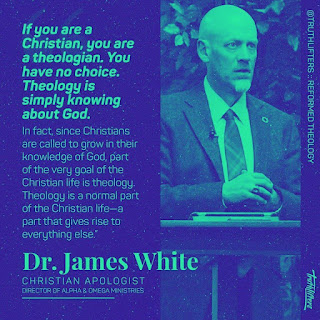
We also don't need to be arrogant in our knowledge. I've had to learn that, myself. Recall that an imbalance of these, like an imbalance in our diet, is not healthy for our Christian walk!
And by "imbalance", I don't mean that you can know "too much" about God, or "be too committed" to God or "be too passionate". Anything that appears to be "too much" of these things isn't actually too much, just focused incorrectly, probably always to the exclusion of one or more of others. It's only "too much" if it takes away from the other aspects of true love and worship. We can never love God too much; loving God in an imbalanced way is actually loving God less, because we are depriving God of one or more aspects of our lives and trying to compensate with another.
Strength!
God has given each and every one of us talents to use for His Glory. If we are committed to Him, if we are passionate about our commitment, if we desire to know more about Him, then this will all lead to us finding out and using our talents for furthering the Kingdom of God.
Our worship should have real-world consequences, and for the good. Our love for God should be worked out in actions: in feeding the hungry, in clothing the naked, in telling others about the Faith. It all amounts to nothing if we don't have actions, as St. James states in his Epistle.
This connects the first Great Commandment with the second: that might be why it's the last on the list. We demonstrate our love for our neighbors by using our talents to further God's Kingdom. The two commandments are connected by the use, the action, of our love for God. We need this last one for a healthy balance.
It's All Connected
In fact, our worship is not worship unless we have a healthy balance of all four of these.
It isn't worship if we aren't committed.
It isn't worship if we aren't passionate.
It isn't worship if we are willingly ignorant.
And we don't have at least one of the other three if it doesn't result in using our God-given talents for His Kingdom. If we don't use our talents for God's Kingdom, we aren't following the second Commandment.
When we practice a balanced form of worship, we find that we are then slowly conformed more and more into the Image of His Son, Jesus Christ. This is why how we worship is so essential for our walk. Whether your service has incense or fog machines, whether your worship music puts people to sleep or keeps the neighbors up. whether you contribute to the Kingdom through 3rd world missions or youth lock-ins, a balanced worship makes you more and more like Christ.
I humbly submit that we as the Church need to get out of our comfort zones and pursue God fully in every aspect of our lives. We aren't called to half-ass our love for God. We are commanded to give nothing less than our all.
Without getting into details, my friend was going through a point where she felt like she was worthless, like she was useless. Thankfully, we were able to help her out with that situation by talking to and praying over her.
Truth be told, the situation angered me greatly. Not because of her at all; she is a great Christian who genuinely cares about the things of God. No, I was realizing, as we were talking, how we as the Church in the U.S. have so totally screwed up our generation even more greatly than I'd thought before.
Our generation has been trained to look at our emotional state as reality, rather than as our perception of reality. One of the ways the Church has pushed that is through...yes, through the way we worship.
"Oh, NO!" I can hear the cry. "Another article on how screwed up worship is!"
This isn't a knock on modern worship in general. I encountered this same problem, the problem I will be addressing, in worship using "boring old hymns". I fully believe that one can have correct worship with modern music and modern instruments. The style is not the problem.
This isn't a rejection of the emotions in worship: emotions are necessary for worship.
The problem is that our focus has been too much on the emotions of worship...sometimes to the exclusion of just about everything else. The way we worship today is often primarily focused upon how we feel: from the soft lighting to the slow dancing to the acoustic guitar playing softly in the background during the altar call, the emotions of the people always seem to be foremost. And once again (I have to repeat this because I know people will miss it if I don't), the emotions AREN'T BAD. They aren't bad even in worship: in fact, to repeat, they are NECESSARY.
But while protein is necessary for a good diet, if all I ever do is drink protein shakes I in fact have an incredibly UNhealthy diet.
If we are to worship correctly, we need to understand that we need to worship fully. A worship experience that focuses only on one aspect of worship is unhealthy. Now, please pay attention to this part, because it's incredibly important: I firmly believe that worship that focuses primarily, if not exclusively, on the emotions trains us to view our emotions as reality rather than perceptions of reality.
Please read that again; I'll wait.
What happens in such worship services? I can speak personally, and have heard similarly from many other Christians. We come to church in the morning, and we gather together for worship. The emphasis, our primary way of connecting to God, is through the emotions. Because of this, we are teaching ourselves that the best way to know the Ultimate Reality, to connect to the Ultimate Reality, is through how we feel; certainly, we are learning that it's the best indicator. The music puts us in a great mood as we sing praises to God, and our emotions soar. This gives us such a great feeling; we know we are close to God because we feel close to God.
But...what happens when we feel...not close to God? What happens when depression kicks in? We've taught ourselves, through this form of worship (though, to be fair, there are many things in the modern culture teaching this lesson as well) that our reality is known by our emotions, because we don't go beyond an emotional connection to God, the Ultimate Reality. So what happens when our emotions tell us that we are beyond help? That we are useless? That we have no reason to live?
See the problem?
I don't want to claim that fixing the inherent problems in our worship will solve all problems. I do want to claim that, at the least, fixing this problem will help plug up the negative contributions to our culture. At best, it will help a lot of people cease from viewing their emotions as the reality. Yes, churches throughout the U.S. have the opposite problem: almost no emotion in worship. I will deal with that as well. However, the trend is the emphasis of worship, often to the exclusion of everything else.
What we need is a balanced form of worship.
This is a call for us to worship fully, with the entirety of our being.
First, what are the two Great Commandments? The ones on which hang all of the Law and the Prophets?
According to Mark 12:29-31, the two most important Commandments are, "‘Hear, O Israel: The Lord our God, the Lord is one. And you shall love the Lord your God with all your heart and with all your soul and with all your mind and with all your strength.’ The second is this: ‘You shall love your neighbour as yourself.’ There is no other commandment greater than these.”
I think that this is a good start. To love God is to worship God, and to worship God is to love God. Christ gave us four ways in which to worship the Father. Let's take a look at each one:
Heart!
 |
| This list is reminding me of that Bob-awful show, Captain Planet. If you don't know it...consider yourself lucky. |
What emotions do is color our perception of reality. When we worship, we should expect to feel joy: worship is what we are created to do! Worship should make us passionate.
This requires us to be honest with how we feel, and responsible with how we let others know how we feel. Having a more vocal emotional outburst is not an indicator that one has "more emotions" any more than an arrogant know-it-all who won't shut up means that he has more knowledge than a quiet person. All it demonstrates is that we may or may not know how to handle such things.
Also remember that, while emotions reflect our perception of reality, they are not reality. I may feel like I am no longer the son of my mother after disappointing her: that in no way means I have stopped being her son.
Soul!
We often conflate this with the heart, forming emotions and will into one thing. Our worship, both in and out of the service, is to be a committed one. Everyone wants to worship God when He's handing out free candy and cars. Not so easy when He's leading you through the Valley of the Shadow of Death. The most critical problem with a worship based on emotions is that, when we don't feel like worshipping God...we don't. The commitment to worship God, the will to worship God (which, by the way, comes from the Spirit ultimately), brings us to worship even when we don't feel like it. Rarely does one "feel" like doing homework (unless you're a weirdo; oh good grief, I'm kidding, calm down); I can attest, as senioritis is really kicking in with this last semester of my undergrad. However, commitment, the will to do your responsibilities, pushes you to finish your homework.
Of course, if it's all mindless commitment and no emotion...that is not only personally unhealthy, it is a horrible example to others. We need to be committed and passionate about our love for God.
Mind!
We need to worship God with our minds. God gave us the ability to think, not only deeply but critically. If we are committed to God, and passionate about our commitment, good! But a mindless commitment, no matter how passionate, is not healthy; it's certainly not something that will attract others to Christ.
We need to be committed to an intellectual pursuit of God. We need to know about the God we claim to love. How horrible would it be if your significant other knew, well, almost nothing about you? Nothing about your background, your career, your desires, your accomplishments...and didn't care? We tend to call that infatuation, not love.
That means that we should know about theology. And no, I don't want to place a qualifier on that; I don't want to place a qualifier on any of these! I'm not going to state that, "Not everyone needs to know XYZ." I think that with all of these, we shouldn't settle for the lazy level. Go at each of these fully, including loving God with your intellect.

We also don't need to be arrogant in our knowledge. I've had to learn that, myself. Recall that an imbalance of these, like an imbalance in our diet, is not healthy for our Christian walk!
And by "imbalance", I don't mean that you can know "too much" about God, or "be too committed" to God or "be too passionate". Anything that appears to be "too much" of these things isn't actually too much, just focused incorrectly, probably always to the exclusion of one or more of others. It's only "too much" if it takes away from the other aspects of true love and worship. We can never love God too much; loving God in an imbalanced way is actually loving God less, because we are depriving God of one or more aspects of our lives and trying to compensate with another.
Strength!
God has given each and every one of us talents to use for His Glory. If we are committed to Him, if we are passionate about our commitment, if we desire to know more about Him, then this will all lead to us finding out and using our talents for furthering the Kingdom of God.
Our worship should have real-world consequences, and for the good. Our love for God should be worked out in actions: in feeding the hungry, in clothing the naked, in telling others about the Faith. It all amounts to nothing if we don't have actions, as St. James states in his Epistle.
This connects the first Great Commandment with the second: that might be why it's the last on the list. We demonstrate our love for our neighbors by using our talents to further God's Kingdom. The two commandments are connected by the use, the action, of our love for God. We need this last one for a healthy balance.
It's All Connected
In fact, our worship is not worship unless we have a healthy balance of all four of these.
It isn't worship if we aren't committed.
It isn't worship if we aren't passionate.
It isn't worship if we are willingly ignorant.
And we don't have at least one of the other three if it doesn't result in using our God-given talents for His Kingdom. If we don't use our talents for God's Kingdom, we aren't following the second Commandment.
When we practice a balanced form of worship, we find that we are then slowly conformed more and more into the Image of His Son, Jesus Christ. This is why how we worship is so essential for our walk. Whether your service has incense or fog machines, whether your worship music puts people to sleep or keeps the neighbors up. whether you contribute to the Kingdom through 3rd world missions or youth lock-ins, a balanced worship makes you more and more like Christ.
I humbly submit that we as the Church need to get out of our comfort zones and pursue God fully in every aspect of our lives. We aren't called to half-ass our love for God. We are commanded to give nothing less than our all.
Thanks for reading all of the way through; I hope you like my blog! If so, I'd love for you to check out my Patreon page and support me as I go through seminary. Oh? You don't know I'm in seminary? Well, I am! Yeah, if you wish you can check out my article on that, here. Be sure to check out my Facebook page, too!
Oh! And I also run a podcast with my atheist friend, Xrys! It's called The Religious Nut and Hellbound Sinner Podcast, and we have a fun time discussing all sorts of topics: religion, politics, science, philosophy, movies, etc. Check out our Facebook page on that, as well!
Thursday, October 27, 2016
For the Wages of Sin is Death, Not Torture: Why I Hold to Annihilationism (Part 1: Philosophy)

The subject of hell has been one of the most hated beliefs by those who aren't a part of Christianity, and is not generally well-loved within Christian circles, either. Why? Well, obviously, the thought that a loving God would torture people for all eternity is...confusing, at best. It has been tempered throughout the centuries, of course: Dante had those in hell tormenting themselves with their own sins, philosophers like William Lang Craig hold to it as mere isolation from God, etc.
For me, the concept of God eternally torturing people was too much to swallow. I found myself holding two very contradictory beliefs: that God loved everyone, and that God wanted to torture some of those people for all eternity, or at least was willing to. It was proving too much to handle; I had to study this subject, as I could not continue to hold these two opposing views in my head. This led me to an understanding that allowed me to hold together both the justice and goodness of God: annihilationism.
I will be doing a multi-part series on what led me to annihilationism, or conditionalism: the belief that God destroys the wicked to where they no longer exist. It makes sense to me to start with the philosophy of it rather than exclusively the Scriptural support. The reason is that we always bring philosophy to the Scriptures; it's impossible to do otherwise. This way, we can understand the lens we will be using when we do search Scripture to understand how it is supported. Otherwise, an article starting off the series with a bunch of passages will look like nothing more than proof texting. I want to point out that these points will be revisited in the next article, to show why they are important to Scripture; as well, I will allude to various passages in Scripture in this article, though not elaborate much on them.
The Reasons for Punishment
First, it is important to understand WHY God has to punish the wicked. It makes little to no sense for God to keep wicked people alive for all eternity. Why? If sin and sinners are the problem, then why not actually get rid of them? If, as Scripture says, ALL of creation is going to be renewed and there will be no more sin, then how can it be that God will, somewhere in creation, still have a place wholly dedicated to sin and sinners? If God's desire is to rid creation of sin, then it makes sense to wholly rid creation of sin by utterly destroying said sinners to the point of no life whatsoever, not merely keeping them alive enough to continue in sin.
Generally, an informed Christian might argue that sin against an infinite God requires infinite punishment. I don't necessarily disagree with that, which leads me to my second point: the nature of the punishment is the question, not the duration.
The Nature of Punishment
Conditionalists generally hold to the understanding that our position IS one of eternal punishment. We see that the punishment is the destruction of the wicked, not torture/isolation. While torture or isolation may be involved, that's not the punishment itself. So we don't say that Bob the Mass Murderer is tortured for 100 years in hell, then after the punishment of his torture he is puffed out of existence. No, the idea is that, however long the "pain" part of it lasts, or how severe, or if there even is any, the punishment itself is the death, the destruction. That death, that destruction called "the second death" in Revelation, will be forever, unlike the first death (the death we all face in this life).
Imagine a man sentenced to die. He may be placed in a jail cell for a few years, but that is not, in and of itself, his punishment. His punishment is death. Contrast that with a man sentenced to life without parole: that punishment is NOT a punishment in which someone is killed. That punishment is one in which the isolation itself is the punishment. When the annihilationist repeatedly sees passages indicating that the punishment for sin is death or destruction, (s)he sees that the punishment is really the actual death/destruction, the ending of life.
The Goals of Punishment
This obviously ties in with the first point. What is God's desire in punishing these people? To rid the world of wickedness. Passages like Romans 11, Revelation 22, and others seem to indicate that the whole of creation will be restored to perfection. This would indicate that there will be no more sin. To argue that the sinners will be in another part of creation (hell was created by God, if God created everything in creation) doesn't work: that's still a part of creation that is imperfect and, well, literally full of sin. The annihilationist holds that the punishment, destruction, has a goal: rid the world of evil. The traditional view doesn't rid the world of evil, only concentrates it into one spot. That's not the same thing.
These three points helped me in voicing my problems with the traditional view of hell; with them, I went into looking at what the Scriptures said about the subject. In the next article we will revisit these three points, developing their strength by pointing to Scriptural evidence of them, and pointing to passages that seem to speak outright of annihilationism as the punishment for sin. Expect to see the second article within a few weeks. Until then, RethinkingHell.com is a great resource for more information on annihilationism; specifically, this is one of the best podcasts in support of the topic. Hope you have a happy Halloween, and don't forget to be at Mass for All Saints Day!
Thanks for reading all of the way through; I hope you like my blog! If so, I'd love for you to check out my Patreon page and support me as I go through seminary. Oh? You don't know I'm in seminary? Well, I am! Yeah, if you wish you can check out my article on that, here. Be sure to check out my Facebook page, too!
Oh! And I also run a podcast with my atheist friend, Xrys! It's called The Religious Nut and Hellbound Sinner Podcast, and we have a fun time discussing all sorts of topics: religion, politics, science, philosophy, movies, etc. Check out our Facebook page on that, as well!
Friday, October 14, 2016
Two Reasons Why This is a Short Update! (The Second One Will AMAZE You!) (Totally NOT Clickbait)!
Hey, there! So, I want to apologize for not writing as many articles as I should be; this is my last semester for my undergraduate, and senioritis has REALLY been kicking in. Yay! I get to graduate in December! I'm so happy!
As well, some developments have been happening at my parish, and my priest and the parish committee have tasked me with some new responsibilities because of that. Those responsibilities have been taking priority; to make up some of the time, I had to cut back on hours at work. My blog has been suffering similarly.
I do have some big news, but I may share that in a full article rather than a simple update. For now, I'll post about two bits of info that may interest you:
First, a good friend of mine, Jordan, is helping me manage the Barely Protestant Facebook page; he's an awesome guy who's story is somewhat similar to mine: we both have found ourselves on the journey to a more liturgical tradition. His blog is Crossing the Phoenix, and it's pretty thoughtful; I learn quite a bit from it.
The second thing I want to update you all on is that my next ACTUAL article will be on the very touchy subject of Annihilationism, or Conditional Immortality. It's a tough one to write, because there is SO MUCH to say. I'm seriously considering discussing it over about three or four articles. In fact, expect that.
Anyways, hope you all are doing well. Oh! One last thing! A Christian from my area of Tennessee has a movie review channel on Youtube. The channel, "Say Goodnight Kevin", is pretty thought provoking and hilarious. I've become a supporter, and our first shout-out was this past month on his "Vanished: Left Behind--the Next Generation" (queue Picard) video. I really appreciate Kevin's commitment to holding high standards for Christian media; it's something we desperately need.
Okay, I guess that's it for now; I hope to have my next actual article up by the end of October. Peace!
Thanks for reading all of the way through; I hope you like my blog! If so, I'd love for you to check out my Patreon page and support me as I go through seminary. Oh? You don't know I'm in seminary? Well, I am! Yeah, if you wish you can check out my article on that, here. Be sure to check out my Facebook page, too!
Oh! And I also run a podcast with my atheist friend, Xrys! It's called The Religious Nut and Hellbound Sinner Podcast, and we have a fun time discussing all sorts of topics: religion, politics, science, philosophy, movies, etc. Check out our Facebook page on that, as well!
Subscribe to:
Posts (Atom)